
A bright, white smile can transform your confidence and make a lasting impression in both personal and professional settings. With countless whitening products available at drugstores and online, plus professional treatments offered by dentists, choosing the right option for your needs can feel overwhelming.
Understanding the differences between professional and at-home whitening treatments helps you make an informed decision about your smile. At Sunrise Dental Cary, Dr. Jordan Tucker offer teeth whitening solutions that deliver safe, effective results while protecting your oral health throughout the process.
How Teeth Whitening Works
All whitening treatments work by using bleaching agents to break down stains on tooth enamel. According to the American Dental Association, teeth become stained when pigments called chromogens attach to the white outer part of your tooth. Whitening products contain either hydrogen peroxide or carbamide peroxide, which penetrate the enamel and oxidize these pigments, making them colorless.
The concentration of the bleaching agent and the duration of application determine how much whitening occurs. Professional treatments use stronger concentrations than over-the-counter products, which is why they typically produce more dramatic results in less time. However, higher concentrations also require careful application to protect your gums and tooth enamel.
Professional In-Office Whitening
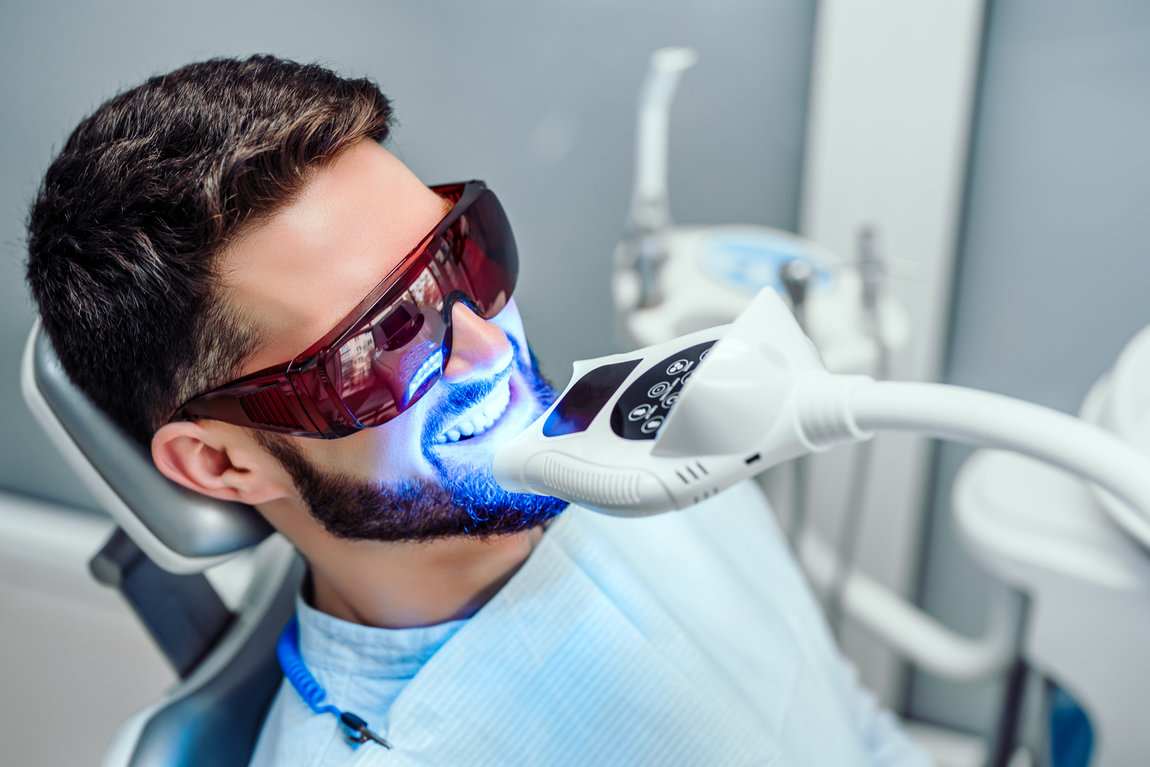
Professional whitening treatments performed at a dental office offer the fastest and most dramatic results. Your dentist applies a high-concentration bleaching gel to your teeth after protecting your gums with a barrier. Many systems use special lights or lasers to activate the whitening agent, accelerating the chemical reaction that removes stains.
In-office treatments typically take 60 to 90 minutes and can lighten teeth by several shades in a single visit. The controlled environment allows dentists to use stronger products safely while monitoring your comfort throughout the procedure. This option works well for people with stubborn stains or those who want immediate results before a special event.
Benefits of Professional Treatment
Professional whitening provides consistent, predictable results because dentists customize the treatment to your specific needs. They can adjust the concentration and application time based on your current tooth color, the type of staining present, and your sensitivity level. This personalized approach minimizes discomfort while maximizing whitening effectiveness.
Dentists also examine your teeth before whitening to ensure you’re a good candidate for the procedure. They can identify issues like cavities, gum disease, or worn enamel that should be addressed first. Having a professional oversee the process reduces the risk of complications and ensures your overall oral health remains protected. Our cosmetic dentistry services include comprehensive evaluations to determine which whitening approach suits you best.
Take-Home Professional Whitening Kits
Many dental practices offer custom take-home whitening kits as a middle-ground option. These kits include custom-fitted trays made from impressions of your teeth and professional-grade whitening gel. The bleaching agent concentration is lower than what’s used in-office but higher than store-bought products.
You wear the trays with whitening gel for a specified period each day, usually ranging from 30 minutes to several hours or overnight. Most people achieve their desired results within one to two weeks. This option costs less than in-office treatment while still providing professional supervision and better results than drugstore alternatives.
Advantages of Custom Trays
Custom-fitted trays ensure the whitening gel stays in contact with your teeth evenly and doesn’t leak onto your gums, which can cause irritation. The precise fit also prevents saliva from diluting the whitening agent, making the treatment more effective. You can use these trays for touch-ups in the future by purchasing additional gel from your dentist.
Professional guidance throughout the process helps you avoid common mistakes that reduce effectiveness. Your dentist provides specific instructions about how long to wear the trays, how often to apply the gel, and what to do if you experience sensitivity. This support leads to better outcomes and fewer problems than you might encounter with store-bought products.
Over-the-Counter Whitening Products
Drugstores and online retailers offer numerous whitening products, including strips, gels, toothpastes, and LED light systems. These products use lower concentrations of bleaching agents than professional treatments, which makes them safer for unsupervised use but also less effective. Results typically appear gradually over several weeks of consistent use.
Whitening strips are thin, flexible plastic strips coated with peroxide gel. You apply them directly to your teeth for a specified time, usually 30 minutes, once or twice daily. Paint-on gels work similarly but require you to brush the solution onto each tooth. LED whitening kits combine gel application with a light device that supposedly accelerates the whitening process.
Limitations of Store-Bought Options
Over-the-counter products can’t be customized to fit your teeth precisely, which often leads to uneven results. The one-size-fits-all approach means some areas may not receive adequate coverage while others get too much product. This can result in splotchy whitening or gum irritation from excess gel.
Store-bought whitening products also can’t address the underlying causes of discoloration. If your staining comes from medications, tooth trauma, or internal factors rather than surface stains, these products won’t deliver the results you expect. Without professional evaluation, you might waste time and money on treatments that can’t work for your specific situation. Regular routine exams help identify the source of discoloration before you invest in whitening treatments.
Whitening Toothpastes and Rinses
Whitening toothpastes contain mild abrasives and chemical agents that remove surface stains but don’t actually bleach teeth. They can help maintain results after professional whitening or slightly brighten teeth over time, but they won’t dramatically change your tooth color. These products work best for people with minor staining from coffee, tea, or tobacco.
Whitening rinses function similarly to regular mouthwash but include small amounts of hydrogen peroxide. The brief contact time between the rinse and your teeth means these products provide minimal whitening effects. They may help prevent new stains from forming but shouldn’t be relied upon as a primary whitening method.
Safety Considerations
All whitening treatments can cause temporary tooth sensitivity and gum irritation, but these side effects are usually mild and resolve quickly. Professional treatments come with the advantage of expert monitoring to minimize discomfort. Dentists can adjust concentrations, recommend desensitizing products, or modify treatment duration based on your response.
Overusing whitening products or using them incorrectly can damage tooth enamel or cause severe sensitivity. Some people try to accelerate results by using products more frequently than directed or combining multiple whitening methods simultaneously. This aggressive approach often backfires, leading to translucent-looking teeth, uneven coloring, or lasting sensitivity.
Factors That Affect Results
Your natural tooth color influences how much whitening is possible. Teeth with yellow tones typically respond better to whitening treatments than teeth with gray or brown discoloration. Age also plays a role, as older teeth with thinner enamel may not whiten as dramatically as younger teeth.
Certain types of stains don’t respond well to any whitening treatment. Discoloration caused by tetracycline antibiotics, excessive fluoride during tooth development, or tooth trauma requires alternative approaches. In these cases, veneers or other cosmetic solutions may provide better results than whitening alone.
Maintaining Your Results
Whitening results aren’t permanent, regardless of which treatment method you choose. Teeth gradually accumulate new stains from foods, beverages, and habits. Avoiding or limiting staining substances like coffee, red wine, and tobacco helps maintain your bright smile longer. Using a straw for dark beverages reduces contact with your front teeth.
Good oral hygiene practices extend whitening results. Brushing twice daily and flossing removes surface stains before they set in. Regular teeth cleaning appointments remove buildup that can make teeth appear darker. Most people need touch-up treatments every six months to two years to maintain their desired shade.
Achieve Your Brightest Smile at Sunrise Dental Cary
Dr. Jordan Tucker combines his experience as a private practice owner and clinical faculty member with cutting-edge technology to deliver exceptional whitening results. As one of the top three most technologically advanced dental practices in the United States, Sunrise Dental Cary offers both in-office and take-home professional whitening options tailored to your specific goals and timeline.We evaluate your oral health thoroughly before recommending any cosmetic treatment, ensuring you achieve beautiful results safely. For patients without insurance, our affordable in-house membership plans make professional dental care accessible to all families in the Cary area. Fill out our contact form today to schedule a consultation and discover which whitening option will give you the confident, radiant smile you deserve.