
Losing a tooth is more than just a cosmetic concern. It can affect how you chew, how you speak, and even the long-term health of your jawbone. If you’re weighing your options for replacing a missing tooth, two solutions tend to come up most often: dental implants and dental bridges. Both can restore your smile beautifully, but they work in very different ways and may be better suited to different situations.
At Sunrise Dental in Cary, we understand that choosing the right restoration is a big decision. That’s why Dr. Jordan Tucker and the team take the time to walk every patient through their options so the choice feels clear and comfortable, not overwhelming. Whether you’re replacing a single tooth or multiple teeth, understanding the differences between implants and bridges is a great place to start. If you’re exploring dental implants in Cary, it helps to first understand what sets them apart from other restorations.
What Are Dental Implants?
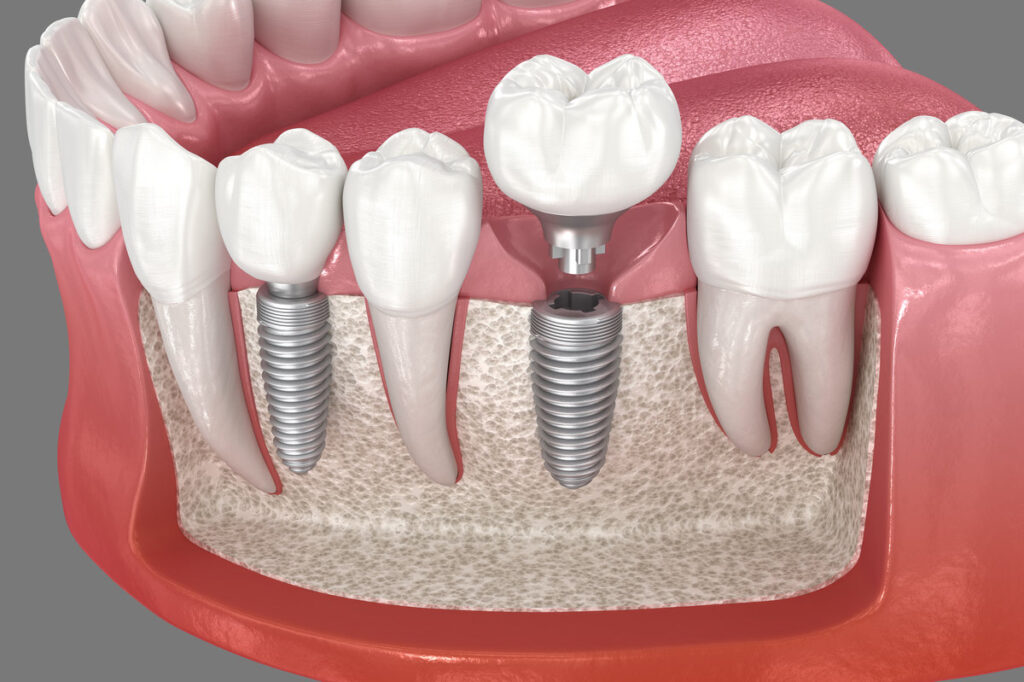
A dental implant is a titanium post that’s surgically placed into the jawbone, where it fuses with the bone over time through a process called osseointegration. Once healed, a custom crown is attached on top, creating a restoration that looks and functions just like a natural tooth. Because the implant is anchored directly into the bone, it doesn’t rely on neighboring teeth for support.
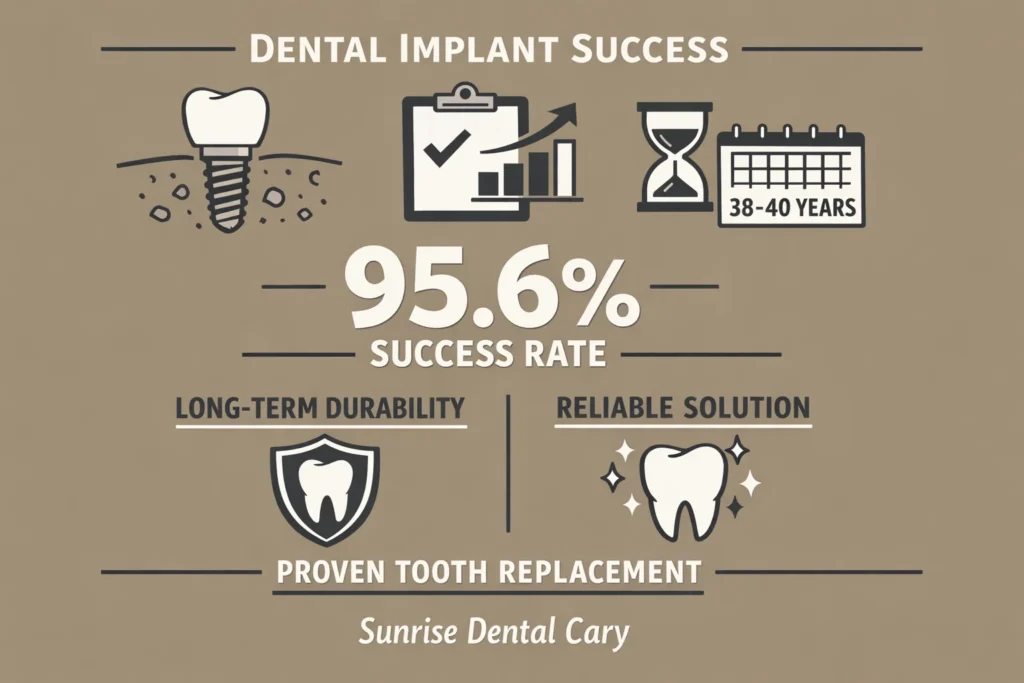
One of the most compelling reasons to choose an implant is its longevity. Research published by the American Dental Association found that dental implants had a 95.6% survival rate after a 38 to 40 year follow-up period. That kind of durability makes implants one of the most reliable tooth replacement options available today.
Implants also play an important role in preserving jawbone density. When a tooth root is missing, the bone beneath it gradually begins to resorb. An implant acts as a substitute root, helping to prevent the bone loss that can lead to changes in facial structure over time. For patients who need bone volume restored before implant placement, bone grafting may be a helpful first step.
What Are Dental Bridges?
A dental bridge literally “bridges” the gap left by a missing tooth by anchoring a prosthetic tooth to the two natural teeth on either side of the space. Those neighboring teeth, called abutments, are prepared by removing a portion of their enamel so that crowns can be placed over them to hold the bridge in place. The result is a fixed restoration that restores your bite and smile.
Dental bridges are a well-established option with a shorter treatment timeline than implants. There’s no surgery involved, and the process can often be completed in just a couple of visits. For patients who aren’t candidates for surgery due to certain health conditions or insufficient bone volume, a bridge may be a more suitable path.
The trade-off is that placing a bridge requires modifying healthy teeth that might not otherwise need any work. Over time, bridges may also need to be replaced, and the area beneath the false tooth can be harder to clean, making consistent oral hygiene habits especially important.
How to Decide Between the Two
The right choice depends on several personal factors, and there’s no one-size-fits-all answer. Here are a few things to consider as you think through your decision.
Your overall health and bone density play a big role. Implants require a healing period and enough jawbone structure to support the post. If you’ve been missing a tooth for a while, some bone loss may have already occurred. Your dentist can evaluate this with imaging and let you know whether you’re a strong candidate. For patients who are good candidates, implants are generally considered the gold standard because they preserve bone, don’t affect neighboring teeth, and can last a lifetime with proper care.
Bridges, on the other hand, may be the preferred route when time is a factor, when adjacent teeth already need crowns, or when a patient is not a surgical candidate. They’re also often a more budget-friendly option upfront, which can make them a practical choice depending on your circumstances. A qualified cosmetic dentist near you can help you weigh these considerations against your specific smile goals.
Choose Sunrise Dental Cary for Your Tooth Replacement
Dr. Jordan Tucker brings a wealth of experience and a genuine passion for patient-centered care to every appointment at Sunrise Dental Cary. As part of a practice recognized among the top three most technologically advanced dental practices in the United States, Dr. Tucker uses modern tools and techniques to make sure your treatment plan is as precise and comfortable as possible. His commitment to education and innovation means you’re always getting care that reflects the latest in the field.Whether you’re leaning toward an implant, a bridge, or you’re simply not sure yet, we’d love to help you find the best path forward. Dr. Tucker and the Sunrise Dental team are here to answer every question and make the decision feel easy. Take the first step toward restoring your smile by filling out our contact form to schedule your consultation today.